Why Strange HVAC Noises And Rising Bills Matter More Than You Think
When our homes in Palestine TX start “talking” to us through strange HVAC noises and sudden spikes in energy bills, it is rarely random. These are some of the most important HVAC diagnostics clues we can get as homeowners, and they often show up long before the system actually fails. At Quality Cool Air Inc, we have seen over and over that the families who pay attention to these signs catch problems earlier, spend less on repairs, and enjoy more comfortable homes year-round.
Odd sounds, new smells, or unexplained costs on your power bill are like a health check engine light for your heating and cooling system. They may point to anything from a clogged air filter to a serious refrigerant or electrical issue. When we learn to “read” these signals, we turn confusion into a clear action plan: what to watch, what we can fix ourselves, and when to call in a professional.
Our passion is helping our neighbors here in Palestine TX feel confident about what their home is telling them. In this guide, we will walk through the hidden clues, explain what they mean, and show how smart HVAC diagnostics can save money, extend equipment life, and keep our homes safer and more comfortable in every season.
Common HVAC Noises: What They Mean And When To Worry
As an HVAC company that works in homes all over Palestine TX, we have learned that the sounds a system makes are one of the most useful HVAC diagnostics tools we have. Every noise has a story, and the sooner we decode it, the better. Some sounds are harmless; others are early warnings of major trouble if we ignore them.
Banging, Clanking, Or Thumping: Mechanical Trouble Brewing
A loud bang or ongoing clanking from the indoor or outdoor unit usually points to loose or broken parts. When we hear these sounds, we think about:
– Loose blower fan blades or mounting hardware
– A broken or unbalanced blower wheel
– A failing compressor or internal components hitting the casing
– Loose panels or screws vibrating against metal
If we notice a single loud “bang” when the system starts up, it might be expanding ductwork or a small ignition delay in a gas furnace. Repeated banging or clanking, however, is a serious red flag. That kind of vibration can damage motors, crack housings, and even cause refrigerant leaks if left alone.
Our recommendation in any Palestine TX home is simple: if the sound is loud enough to startle us or it repeats every time the system runs, we shut it off and call a professional. The cost of an early repair is always lower than replacing a blower motor or compressor that has been hammered to death by vibration.
Whistling, Hissing, Or Whooshing: Airflow And Pressure Problems
Whistling or hissing may sound less dramatic than a bang, but we treat these noises seriously during HVAC diagnostics. Common causes include:
– Air leaks around supply or return vents
– Gaps or holes in ductwork
– Undersized return air grilles causing high air velocity
– A clogged air filter forcing air through small gaps
– Refrigerant leaks (often a softer, constant hiss near the indoor or outdoor unit)
If we hear whistling around vents in our Palestine TX home, the first step is easy: check and replace the air filter. If the filter is clean and the whistle remains, we gently feel around vents and duct joints for drafts that indicate air leaks. Sealing these leaks reduces noise, improves comfort, and can cut energy use noticeably.
A constant, localized hissing at the indoor coil or outdoor condensing unit is more concerning. That may indicate a refrigerant leak, which affects efficiency, cooling ability, and can damage the compressor. In this case, we recommend turning the system off and scheduling a professional service visit. Refrigerant work must be done by licensed technicians, and catching a leak early can prevent far more expensive repairs.
Rattling, Buzzing, Or Clicking: Electrical And Vibration Clues
We treat rattling, buzzing, and persistent clicking sounds as “yellow lights” in HVAC diagnostics. They often indicate smaller issues that can grow into bigger ones:
– Rattling: loose sheet metal, screws, or a minor object in the ductwork
– Buzzing: failing electrical contactor, loose wire, or stressed motor
– Constant clicking: relay or control board problems, or an ignition issue in heating systems
In Palestine TX, we see many outdoor units buzzing because insects, dust, and moisture have corroded electrical components. A buzzing outdoor fan motor or contactor is a textbook example of a problem that can be fixed affordably now or turn into a system failure later.
We can check visible panels and screws and gently tighten them if we are confident and safe doing so. But if the sound seems to come from inside the electrical compartment or motor housing, it is time for a professional inspection. Electrical issues can lead to tripped breakers, overheated wires, or even fire risk if ignored.
Why Your Energy Bills Are Spiking: Hidden Efficiency Killers
Strange noises catch our attention fast. Rising energy bills can be quieter but just as important for HVAC diagnostics. In Palestine TX, we know electric bills can swing with the seasons, but when we see an unexplained spike compared to last year or to similar neighbors, our HVAC system is often the main suspect.
How We Read Energy Bills As A Diagnostic Report
One of the most powerful habits we can build is to track our energy bills over time. We look at:
– Month-to-month changes compared to last year
– Usage in kilowatt-hours (kWh), not just dollar cost
– Spikes that do not match changes in weather or household size
– Bills that stay high even when the system should be running less
If our home in Palestine TX is using 20–30% more electricity than the same month last year, and we have not added major appliances or changed our lifestyle, that is a big HVAC diagnostics clue. It can mean the system is running longer, working harder, or losing efficiency due to issues such as:
– Dirty coils restricting heat transfer
– Low refrigerant charge
– Failing blower motor or fan
– Leaky ducts wasting conditioned air
– Incorrect thermostat settings or thermostat faults
By pairing the “bill pattern” with what we hear, feel, and see in the house, we get a much clearer picture of what is going on inside the system.
Invisible Problems That Make Your System Work Too Hard
Some of the most common causes of high bills do not make loud noises at all. Instead, they quietly drain money month after month until we address them. We often find:
– Dirty air filters: The most common and cheapest fix. A clogged filter can increase energy use by 5–15% and shorten equipment life.
– Dirty evaporator and condenser coils: Dust, pollen, and grease build up, especially in our East Texas climate. Coils that are not cleaned regularly reduce efficiency and cooling capacity.
– Duct leaks: National studies estimate typical homes lose 20–30% of conditioned air through leaky ducts. In older Palestine TX homes, we have seen even higher losses.
– Incorrect system sizing or poor installation: A system that is too big or too small runs inefficiently and wears out faster.
We can handle some steps ourselves: checking and replacing filters every 1–3 months, gently cleaning registers and accessible return grilles, and making sure outdoor units are clear of leaves and debris. But full coil cleaning, static pressure checks, and duct leakage testing are professional HVAC diagnostics tasks that require specialized tools.
When we bring in a pro, we are essentially ordering a full “efficiency audit” for our system. We get data, not guesses, about what is causing the high bills, and we can then choose smart repairs, upgrades, or adjustments that pay us back quickly in lower monthly costs.
For additional information about how energy efficiency and HVAC systems interact, resources like the U.S. Department of Energy’s page on heating and cooling can be helpful:
https://www.energy.gov/energysaver/heating-and-cooling
Using HVAC Diagnostics To Decode Comfort Issues In Palestine TX
While noise and bills are clear signals, one of the strongest hidden clues our HVAC system gives us is how our home feels. As a local company serving Palestine TX, we hear the same comfort complaints often, and each one offers valuable information for HVAC diagnostics when we take it seriously.
Hot And Cold Spots, Weak Airflow, And Humidity Problems
When some rooms are too hot, others too cold, or the air just feels “stuffy,” we pay attention. These patterns usually point to:
– Duct design or installation problems
– Blocked, undersized, or disconnected ducts
– Weak blower performance or incorrect fan speed
– Poor return air pathways
– Improper balancing of supply registers
If we stand under a vent and barely feel air, or if our system runs non-stop yet the thermostat never seems satisfied, the issue is often airflow related. In Palestine TX, we also deal with humidity, especially during long cooling seasons. If our home feels clammy even when the temperature is set correctly, it can indicate:
– Oversized equipment short-cycling and not dehumidifying properly
– Dirty coils or filters restricting air movement across the evaporator
– Incorrect fan speed settings
– Leaky ducts pulling humid air from attics, crawlspaces, or garages
By noting which rooms are uncomfortable, which vents feel weak, and when the issues occur (day vs. night, upstairs vs. downstairs), we give ourselves and our HVAC technician a roadmap for targeted diagnostics, instead of guessing.
Thermostat Behavior And System Run Time
The thermostat is our window into how the system is behaving. We can learn a lot by watching and listening:
We notice:
– How often the system cycles on and off
– How long each cycle lasts
– Whether it overshoots or undershoots the set temperature
– If the display shows error codes or low-battery warnings
In a healthy system, run time varies with weather but follows a consistent pattern. In Palestine TX’s hot summers, longer steady runs are normal; constant short cycling (frequent on/off every few minutes) is not. Short cycling can be caused by:
– Incorrect thermostat placement (too close to a vent, window, or heat source)
– Oversized HVAC equipment
– Safety switches tripping due to problems like a clogged condensate drain or overheating components
– Refrigerant or airflow issues causing the system to shut down prematurely
We can check basic things ourselves: making sure the thermostat is level, clean, away from direct sunlight, and properly programmed for our schedule. If we notice sudden changes in cycle patterns without explanation, that is a sign to schedule professional HVAC diagnostics.
Because Palestine TX homes vary widely in age and construction, we also see many systems where the thermostat is not matched well to the equipment type or staging. A modern programmable or smart thermostat, correctly set up, can improve comfort and efficiency dramatically. But wiring or configuration mistakes can also cause big problems, so we always recommend professional installation for more advanced models.
When To DIY And When To Call A Pro In Palestine TX
We believe homeowners should feel empowered, not intimidated, by HVAC diagnostics. There is a lot we can safely observe and handle ourselves, and knowing the line between DIY and professional help keeps us safe and saves money. In Palestine TX, where our systems work hard all year, smart maintenance and timely professional service make a huge difference.
Simple Checks And Maintenance We Can Do Ourselves
There are several basic steps every homeowner can take to keep systems healthy and catch early warning signs:
– Change air filters regularly:
– Check monthly; replace every 1–3 months depending on dust, pets, and usage.
– Make sure the filter is the correct size and installed with airflow arrows in the right direction.
– Keep vents and returns clear:
– Avoid blocking supply vents with furniture, rugs, or drapes.
– Vacuum dust and pet hair from grilles.
– Inspect the outdoor unit:
– Keep a 2–3 foot clear zone around the unit—no grass clippings, leaves, or stacked items.
– Gently rinse coils with a low-pressure hose from the inside out if safely accessible (power off first).
– Listen and document:
– Note any new noises, odors, or comfort changes.
– Track dates, times, and conditions (weather, mode, thermostat setting).
– Watch the condensate drain:
– Look for water around the indoor unit or ceiling stains near air handlers.
– If accessible, ensure the drain line is not visibly clogged or kinked.
By doing these simple tasks, we handle the “front line” of HVAC diagnostics ourselves. We prevent many issues and give professionals a much clearer picture when we do need help, which often shortens service visits and keeps repair bills lower.
Signs It Is Time For Professional HVAC Diagnostics
There are clear moments when we should stop troubleshooting and call a licensed HVAC technician, especially in the Palestine TX climate where downtime in extreme heat or cold can be dangerous. We recommend professional help when:
– We hear loud banging, grinding, or screeching from the indoor or outdoor unit
– There is a burning, electrical, or strong chemical smell
– The system trips breakers repeatedly or will not turn on at all
– We see ice forming on the refrigerant lines or indoor coil
– The system runs continuously but cannot reach the set temperature
– Our energy bills spike unexpectedly over several months
– Water is leaking around the indoor unit or from ceiling vents
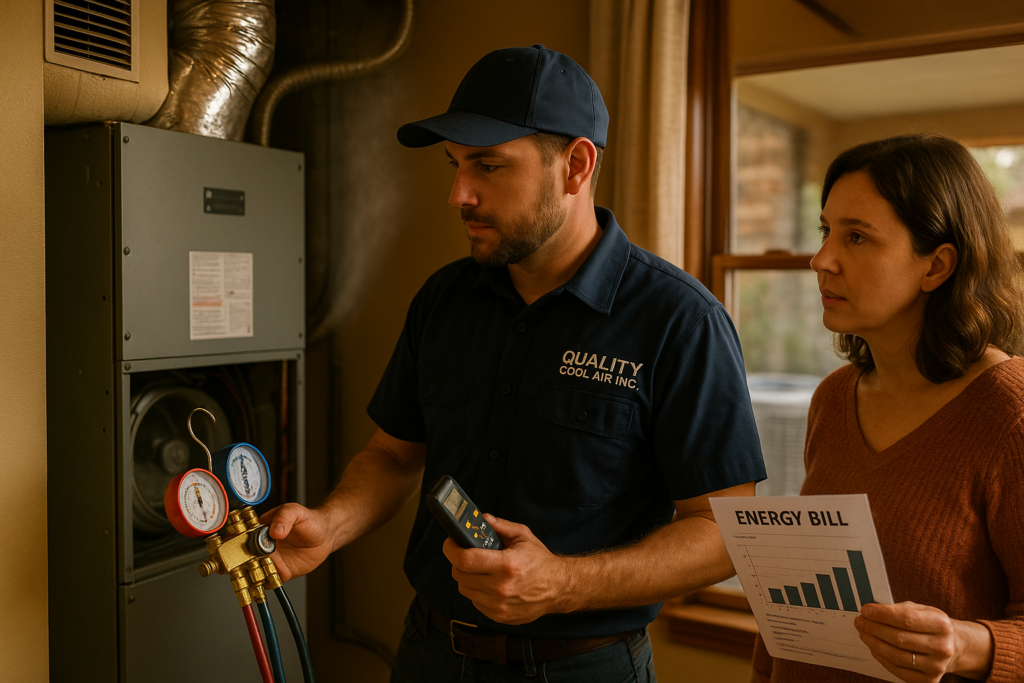
Professional HVAC diagnostics may include tools and tests such as:
– Refrigerant pressure measurements and leak detection
– Electrical testing for motors, capacitors, and contactors
– Static pressure and airflow measurements in ductwork
– Temperature drop across the coil
– Combustion analysis for gas heating systems
– Advanced thermostat and control board troubleshooting
For homes in Palestine TX, we also strongly recommend at least one comprehensive maintenance and diagnostic visit per year (ideally before the cooling season). Our local systems deal with high humidity, pollen, and long run times, all of which stress equipment more than in milder climates.
When we schedule a professional HVAC diagnostics visit, we should not hesitate to ask questions. A good technician will explain what they are testing, why it matters, and what options we have. Our goal as homeowners is not just to fix what is broken today, but to understand our system well enough to make smart decisions about repairs, upgrades, or replacement over time.
If you would like to learn more about our services or schedule an expert diagnostic visit in Palestine TX, you can reach us directly at:
We are here to help you turn those strange noises, high bills, and comfort frustrations into clear answers and long-term solutions.